
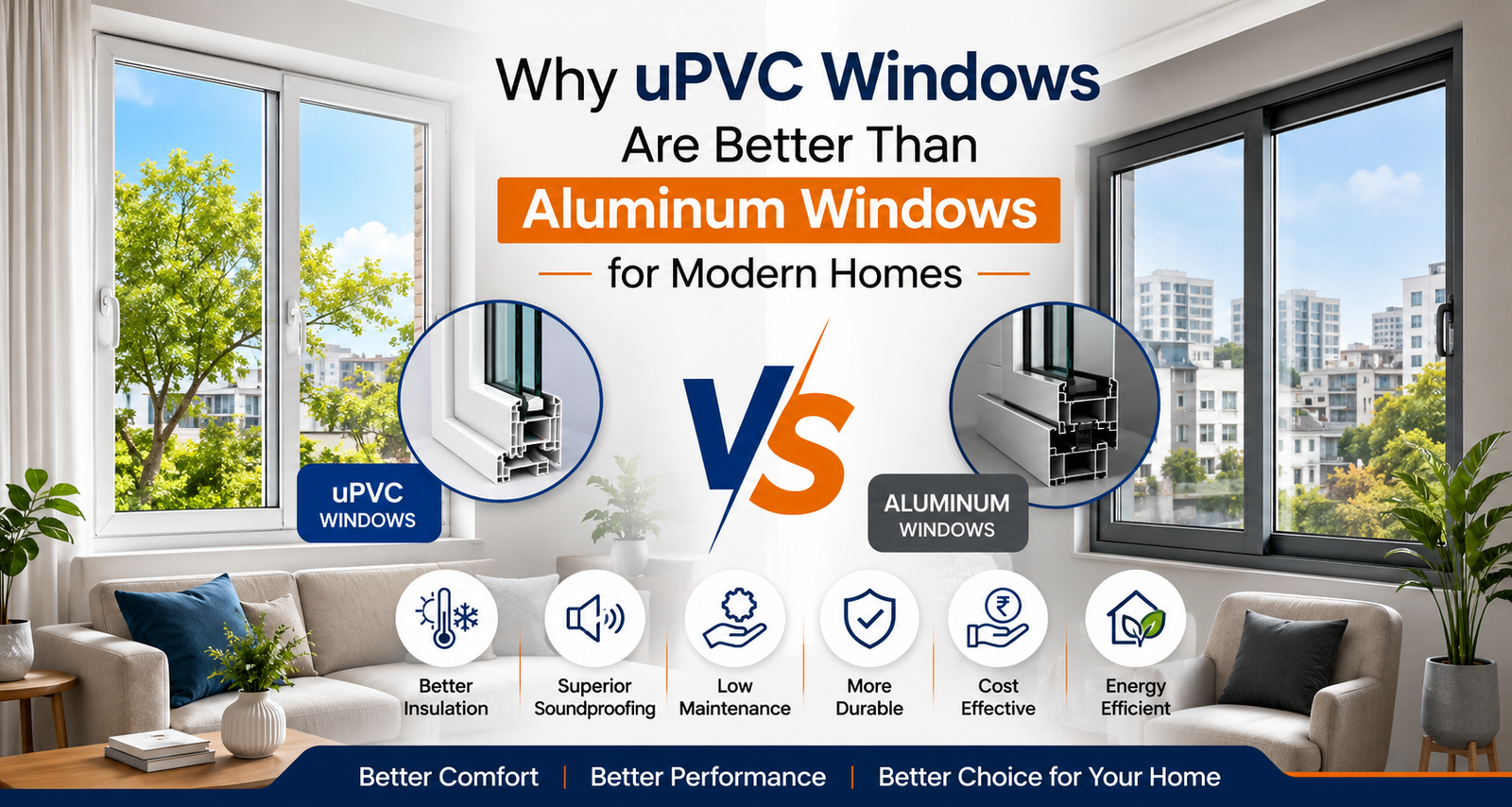
When building or renovating a modern home, choosing the right window material is an important decision. Homeowners often compare uPVC windows and aluminum windows to determine which option offers better performance, durability, and value. While both materials have their advantages, uPVC windows have become the preferred choice for many modern homes due to their energy efficiency, low maintenance, and superior insulation properties.
What Are uPVC Windows?
uPVC (Unplasticized Polyvinyl Chloride) is a durable and weather-resistant material widely used in modern window and door systems. Unlike traditional materials, uPVC does not corrode, rot, or require frequent painting, making it a long-lasting solution for residential and commercial properties.
uPVC vs Aluminum Windows: Key Comparison
1. Energy Efficiency
One of the biggest advantages of uPVC windows is their excellent thermal insulation. uPVC frames help maintain indoor temperatures by reducing heat transfer, which can lower energy consumption and improve comfort throughout the year.
Aluminum, being a metal, conducts heat more easily and may require additional thermal breaks to achieve similar insulation performance.
2. Noise Reduction
Modern homes are often located in busy urban areas where noise pollution can be a concern. uPVC windows provide better sound insulation due to their multi-chambered design and airtight sealing, helping create a quieter and more peaceful indoor environment.
3. Low Maintenance
uPVC windows require minimal maintenance. They do not rust, fade, or peel and can be cleaned easily with a damp cloth.
Aluminum windows may require periodic maintenance, especially in coastal or humid environments where corrosion can occur over time.
4. Weather Resistance
uPVC windows are designed to withstand harsh weather conditions, including heavy rain, humidity, and extreme temperatures. They maintain their shape and performance without warping or deteriorating.
5. Cost Effectiveness
Compared to aluminum windows, uPVC windows often provide a more economical solution without compromising quality. Their durability and energy-saving benefits contribute to long-term cost savings.
6. Enhanced Security
Modern uPVC window systems are equipped with multi-point locking mechanisms and reinforced frames that enhance home security while maintaining aesthetic appeal.
7. Design Flexibility
uPVC windows are available in a wide range of styles, including sliding windows, casement windows, tilt-and-turn windows, and customized designs that complement modern architectural trends.
Which Window Material Is Best for Modern Homes?
While aluminum windows are known for their slim profiles and contemporary appearance, uPVC windows offer a better balance of energy efficiency, sound insulation, durability, maintenance, and affordability. For homeowners seeking long-term value and comfort, uPVC remains one of the best window materials available today.
Conclusion
Choosing the right windows can significantly impact your home's comfort, energy efficiency, and overall appearance. uPVC windows provide superior insulation, weather resistance, noise reduction, and cost-effectiveness, making them an ideal choice for modern homes. Whether you are constructing a new property or upgrading existing windows, investing in high-quality uPVC windows can deliver lasting benefits for years to come.